
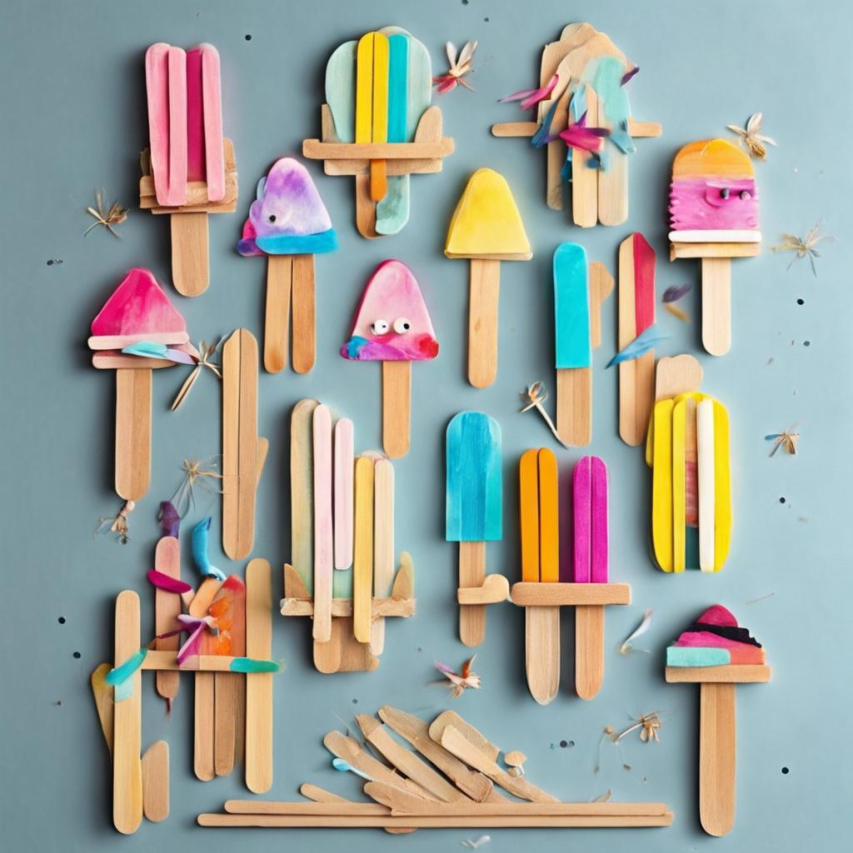

With summer just around the corner, it’s time to embrace the season of sunny days, backyard barbecues, and delicious frozen treats. And what better way to cool off than with a refreshing popsicle? But before you sink your teeth into that icy confection, have you ever stopped to think about the humble popsicle stick that holds it all together? In this article, we’ll take a closer look at the unsung hero of summertime snacking – the popsicle stick. From its origins to its versatility in arts and crafts, get ready to discover the fascinating world of this seemingly simple yet essential item. So grab a popsicle, sit back, and prepare to be enlightened about the tiny wooden wonder that makes summer so sweet.
Table of Contents
- The History and Origins of Popsicle Sticks
- Exploring the Versatility of Popsicle Sticks: DIY Craft Ideas
- The Role of Popsicle Sticks in Science Experiments
- How to Choose the Best Popsicle Sticks for Your Project
- Tips and Tricks for Using Popsicle Sticks in Educational Activities
- Q&A
- Concluding Remarks
The History and Origins of Popsicle Sticks
Popsicle sticks, also known as craft sticks or ice cream sticks, have been a ubiquitous part of American culture for decades. The origins of these humble little sticks can be traced back to the early 1900s when the Popsicle, a popular frozen treat, was first invented. The Popsicle stick was actually born out of necessity rather than intention. In 1905, an 11-year-old boy named Frank Epperson left a mixture of soda powder and water outside overnight with a stirring stick in it. The mixture froze, and thus the Popsicle was born. Epperson started selling his creation at a local amusement park, and it quickly gained popularity.
The use of wooden sticks to hold the Popsicle together came soon after, as it provided a convenient handle to enjoy the frozen treat without making a mess. The Popsicle sticks were initially made from birch wood, which was readily available and inexpensive. Over time, the design and production of Popsicle sticks evolved, with different shapes and sizes becoming available to cater to different Popsicle variations and consumer preferences. Today, Popsicle sticks are not only used for enjoying frozen treats but have also become a staple item in arts and crafts projects. They are used for making everything from miniature houses to picture frames, making them an essential item in the world of DIY creativity.
To honor the history and significance of Popsicle sticks, National Popsicle Stick Day is celebrated in the United States on March 28th. This day is dedicated to appreciating the versatility and enduring appeal of these simple wooden sticks. So the next time you enjoy a refreshing Popsicle on a hot summer day, take a moment to appreciate the history and origins of the little stick that makes it all possible.
Exploring the Versatility of Popsicle Sticks: DIY Craft Ideas
Popsicle sticks are not just for making popsicles, they are extremely versatile and can be used in a variety of DIY craft projects. From home decor to educational activities, here are some creative ideas to explore the potential of popsicle sticks.
Home Decor:
Popsicle sticks can be used to create unique and stylish home decor items. From picture frames to coasters, the possibilities are endless. You can glue the sticks together to form different shapes and patterns, then paint or decorate them to match your home’s aesthetic. You can easily create a rustic photo frame by gluing popsicle sticks together. You can also make a beautiful centerpiece by forming a starburst design and displaying it in a vase. The natural wood look of the popsicle sticks adds a warm and inviting touch to any room.
Educational Activities:
Popsicle sticks are also great for educational activities, especially for young children. They can be used to create puzzles, counting sticks, and even small building blocks. You can write numbers, letters, or shapes on the sticks to help with learning and development. You can also use popsicle sticks to create a DIY abacus, which is a great tool for teaching math concepts. The versatility of popsicle sticks makes them a valuable resource for parents and educators alike.
Overall, popsicle sticks are a simple yet powerful tool for unleashing creativity. Whether you’re a DIY enthusiast or an educator, there are countless ways to use popsicle sticks in creative and practical ways. So, the next time you indulge in a frozen treat, save those sticks and let your imagination run wild with these crafty ideas.
The Role of Popsicle Sticks in Science Experiments
Popsicle sticks are not just for making ice pops on a hot summer day – they also play a vital role in science experiments. Their versatility and durability make them an essential tool for conducting various hands-on experiments and demonstrations in the classroom and at home. From building simple structures to creating intricate models, popsicle sticks are a staple in the world of science education.
One of the most common uses of popsicle sticks in science experiments is for constructing simple machines and engineering projects. Students can use these humble sticks to build bridges, towers, and other structures to test key principles of physics and engineering. They are also used in creating simple levers, pulleys, and wheels, providing a hands-on way to learn about mechanical advantage and other fundamental concepts.
In addition to their role in physical science experiments, popsicle sticks are also used in chemistry experiments for mixing, stirring, and transferring substances. Their wooden composition makes them a safe and inexpensive alternative to traditional laboratory tools, and their disposable nature reduces the risk of cross-contamination. Whether it’s mixing solutions, creating chemical reactions, or building models of molecular structures, popsicle sticks are a valuable resource in the chemistry lab. Their versatility and affordability make them an indispensable tool for science educators and students alike. So next time you enjoy an ice pop, remember that the humble popsicle stick has a crucial role in science education!
How to Choose the Best Popsicle Sticks for Your Project
When it comes to choosing the best popsicle sticks for your project, there are a few key factors to consider. The quality of the popsicle sticks can greatly impact the success and durability of your craft or project. Here are some tips to help you make the best choice when it comes to purchasing popsicle sticks.
First and foremost, consider the material of the popsicle sticks. While traditional wooden popsicle sticks are popular and versatile, there are also plastic and colored options available. Wooden popsicle sticks are great for painting, gluing, and crafting, while plastic sticks are often better for projects that require durability and flexibility. Consider the specific needs of your project when selecting the material of your popsicle sticks.
In addition to material, size is another important factor to consider. Popsicle sticks come in a variety of lengths and widths, so it’s important to choose the size that best fits your project. Thinner sticks are great for intricate designs and smaller crafts, while wider sticks are better for larger projects that require more support. Consider the scale and scope of your project when selecting the size of your popsicle sticks. Additionally, consider whether you need straight or round-end popsicle sticks, depending on the design and purpose of your project.
Tips and Tricks for Using Popsicle Sticks in Educational Activities
Popsicle sticks are versatile and inexpensive tools that can be used in a wide range of educational activities. Whether you’re a teacher, homeschooling parent, or childcare provider, there are many ways to incorporate popsicle sticks into your lesson plans. Here are some :
1. Math: Popsicle sticks can be used to teach a variety of math concepts, such as counting, addition, subtraction, and multiplication. You can use them to create sets for counting, build shapes for geometry lessons, or create arrays for multiplication practice.
2. Science: Popsicle sticks are great for hands-on science experiments. You can use them to build simple bridges or structures to demonstrate basic engineering principles. They can also be used as tools for learning about physics, such as creating catapults or simple machines.
3. Art: Popsicle sticks are a popular craft material, but they can also be used for art projects in an educational setting. You can use them to create 3D sculptures, build frames for paintings, or even make puppets for storytelling activities.
4. Language Arts: Popsicle sticks can be used for literacy activities, such as creating homemade flashcards for vocabulary practice or spelling activities. They can also be used as tools for story retelling or sequencing activities.
By incorporating popsicle sticks into educational activities, you can engage students in hands-on learning experiences that make lessons more memorable and fun. With a little creativity, popsicle sticks can be used to teach a wide range of subjects in a way that appeals to different learning styles. Now, grab a pack of popsicle sticks and start exploring the endless possibilities for educational activities!
Q&A
Q: What are popsicle sticks?
A: Popsicle sticks are small wooden sticks that are commonly used for making homemade popsicles or ice cream bars.
Q: Where did popsicle sticks originate?
A: Popsicle sticks were first used by Frank Epperson, who invented the popsicle in 1905. He initially used a wooden stick to hold the frozen treat.
Q: What are some alternative uses for popsicle sticks?
A: Popsicle sticks are popular for use in various crafts, such as making small models, photo frames, and even as teaching aids for mathematical concepts.
Q: Are popsicle sticks environmentally friendly?
A: Popsicle sticks are typically made from natural, biodegradable wood, which makes them environmentally friendly compared to plastic sticks.
Q: Can popsicle sticks be recycled?
A: Yes, popsicle sticks can be recycled or composted, making them a sustainable choice for disposable utensils.
Q: What are some creative ways to use popsicle sticks in crafting?
A: Popsicle sticks can be used to create miniature furniture, jewelry, and even as part of home décor projects.
Q: Where can one purchase popsicle sticks?
A: Popsicle sticks are readily available at craft stores, supermarkets, and online retailers, making it easy for anyone to get their hands on this versatile crafting material.
Concluding Remarks
And there you have it – a brief look into the world of popsicle sticks. From their humble beginnings as a way to enjoy a frozen treat to their current uses in crafts, construction, and more, these simple wooden sticks continue to make a big impact. Whether you’re a DIY enthusiast, a teacher looking for new classroom activities, or just someone who appreciates a timeless classic, popsicle sticks are always there to lend a helping hand (or a support for your next art project). So next time you enjoy a popsicle on a hot summer day, take a moment to appreciate the versatile little stick that comes with it. Cheers to the mighty popsicle stick!